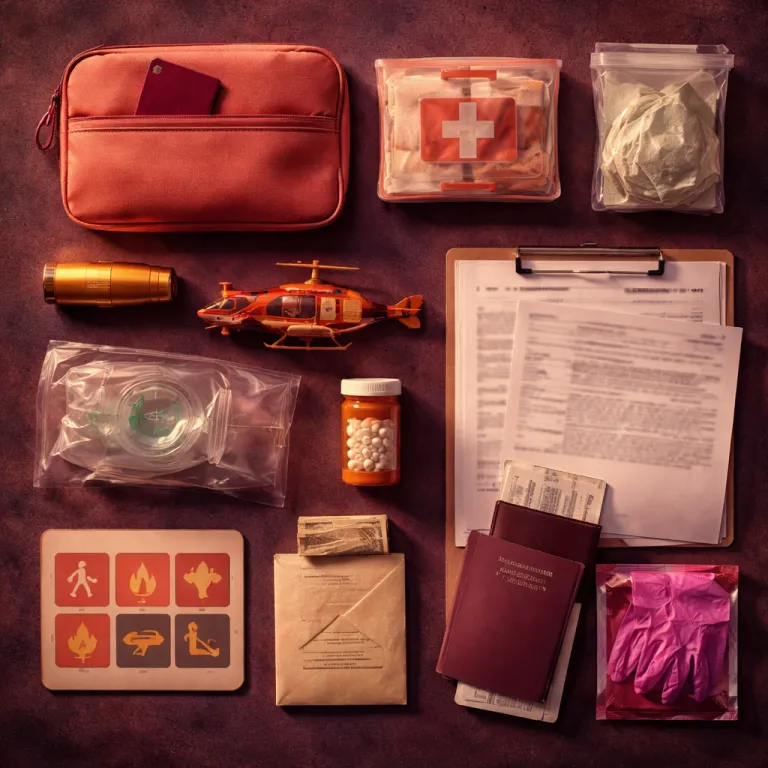
Hotel medical evacuation liability: from ad hoc crisis to structured policy
Executive summary. Medical evacuations that cost more than USD 250,000 have turned guest health crises into balance sheet and brand risks for hotels, OTAs and travel insurers. Most portfolios now see hundreds of health-related incidents a year, yet many properties still improvise when a guest needs an air ambulance or complex emergency care abroad. This article explains how hotel medical evacuation liability arises in practice, outlines three defensible strategic positions (recommend, partner, disclaim), makes the case for structured insurance partnerships, and offers a practical framework and checklist for general counsel and risk committees to turn ad hoc responses into a documented, auditable policy.
Section 1 – When a medical evacuation becomes a hotel balance sheet problem
Hotel medical evacuation liability is no longer a theoretical legal footnote. When a guest suffers a serious medical emergency abroad and needs an air ambulance, the evacuation cost can climb past USD 250,000 before anyone has checked the insurance policy wording. In that moment, the absence of a clear hotel group plan on medical evacuations turns a health crisis into a financial and reputational one.1
In real incidents, the chain of events is brutally simple. A guest reports chest pain, the hotel équipe calls local emergency services, the ambulance arrives within minutes, and the guest is transferred to the nearest medical facility for emergency medical treatment and stabilisation. Only then do questions about travel insurance, evacuation insurance, evacuation coverage and who will cover the medical evacuation invoice reach the front desk, the general manager and eventually the group’s legal and insurance teams.
For international health and travel health exposures, the gap between guest expectations and actual coverage is widening. Global health insurance and international health premiums have risen sharply, while many travel insurance policies still cap emergency evacuation benefits at levels that do not match current air ambulance market prices.2 Most experts now recommend at least USD 250,000 in evacuation coverage as a floor, yet many guests arrive with a travel insurance plan or insurance policies that offer lower benefits or exclude their specific country, activity or pre existing medical condition.
When the guest’s medical insurance or travel insurance fails, the pressure shifts. Families ask the hotel to recommend a solution, local doctors insist on transfer to a higher level medical facility, and consular staff query whether an emergency evacuation is clinically necessary or merely preferable. In practice, hotel management teams often improvise, leaning on any existing partnership with medical evacuation service providers, local hospitals or an insurance company, but without a group level insurance plan or policy framework that defines how far the property should go in arranging care, guaranteeing cost or advancing funds.
That improvisation is where hotel medical evacuation liability quietly takes shape. If a hotel appears to guarantee that an insurance policy will cover a specific emergency medical evacuation, or if it arranges an air ambulance without clear documentation of who pays, plaintiffs’ lawyers will later argue that the property assumed a duty of care that extends beyond basic hospitality. The legal standard remains that hotels may be liable for guest medical emergencies if negligence is proven, yet the operational reality is that every undocumented promise about coverage, benefits or repatriation coverage becomes potential evidence.
For travel insurers, OTAs and booking platforms, this is not just a hotel problem. When a guest books a stay in Japan or another high cost country through an online travel agency, the embedded travel insurance product, the health insurance add on and the evacuation insurance option all shape expectations about what will happen if a medical emergency occurs. If the guest believes their insurance plan guarantees full cover for medical evacuations and repatriation remains, but the small print excludes that specific country or activity, the hotel becomes the visible party in the chain when treatment is delayed or denied.
From a financial director’s perspective, the exposure is asymmetric. A single catastrophic emergency evacuation or accidental death and dismemberment claim can wipe out the profit of a flagship property, while the hotel has no direct premium income from any travel insurance or medical insurance sold upstream. Yet the brand will still be judged on whether the guest received timely care, whether the evacuation was organised efficiently, and whether the family felt abandoned when the insurance policy declined to cover the full cost of treatment and transport.
The dataset on hotel incidents underlines how frequent these situations can become. Large portfolios can see hundreds of health related incidents per year, with a significant share escalating into complex medical evacuations that require coordination between local hospitals, ambulance services, medical evacuation service providers and insurers.3 In that context, a hotel group that has no explicit stance on hotel medical evacuation liability is effectively allowing each property to set its own risk appetite in the middle of the night, under pressure, with incomplete information and no consistent documentation.
Illustrative case – cardiac emergency in a remote resort (Thailand, 2022). A 62-year-old guest suffered a heart attack at an island resort. The nearest tertiary medical facility with catheterisation capability was on the mainland, requiring helicopter transfer. The guest’s basic travel insurance capped evacuation benefits at USD 50,000; the air ambulance quote reached approximately USD 165,000, with total medical costs near USD 210,000. The family asked the hotel to “guarantee payment” so the transfer could proceed. Front office staff, lacking guidance, emailed that the hotel would “help ensure everything is covered,” which later became a focal point in negotiations when the insurer declined part of the claim and the family argued the hotel had assumed responsibility.
Section 2 – Three strategic positions: recommend, partner, or disclaim
Senior hotel executives and general counsel really have only three coherent positions on hotel medical evacuation liability. You can recommend that guests obtain robust travel insurance and evacuation insurance from third parties, you can partner to embed a hotel branded insurance plan with defined evacuation coverage, or you can explicitly disclaim responsibility and document that stance across all channels. Anything in between is not nuance; it is unmanaged exposure.
The first option is the lightest touch. Under a recommend strategy, the hotel group does not sell or intermediate any insurance policies, but it does clearly advise guests to secure comprehensive travel insurance, medical insurance and international health coverage that includes emergency evacuation and repatriation coverage. Communication focuses on explaining that medical evacuation from a remote resort or from a country with high health care cost can reach six figures, that emergency medical treatment at a private medical facility abroad may not be covered by domestic health insurance, and that only a robust insurance policy with sufficient benefits will reliably cover both treatment and transport.
The second option is to partner. Here, the hotel group works with a licensed insurer or managing general agent to create a hotel branded travel insurance plan that can be offered via OTAs, direct booking platforms and corporate channels, often as an embedded travel insurance product. This approach mirrors the embedded travel insurance models analysed in depth in the context of Southeast Asia in this case study on embedded travel insurance partnerships, where distribution integration and clear evacuation coverage wording drive attach rates and claims performance.
In a partner model, the hotel group does not assume medical evacuation cost directly, but it does take responsibility for the quality of the insurance plan it recommends. That means insisting on high limits for emergency evacuation, emergency medical treatment and repatriation remains, transparent exclusions for adventure activities, and clear benefits for accidental death and death dismemberment. It also means aligning operational protocols so that when a guest suffers a medical emergency, hotel staff know exactly which emergency numbers to call, which medical evacuation service providers to contact, and how to trigger the insurer’s assistance platform without promising that every cost will be covered.
The third option is to disclaim and document. Under this stance, the hotel group states explicitly that it does not provide health insurance, travel health coverage, evacuation insurance or any insurance policies, and that guests are solely responsible for arranging their own insurance plan. This position can be legally defensible, especially when combined with clear pre arrival communication that explains the potential cost of medical evacuations, air ambulance transport and private medical facility care in the destination country. However, it also leaves the guest alone in navigating complex international health systems during an emergency.
Each of these three positions has a different impact on hotel medical evacuation liability. A pure recommend stance reduces direct exposure but still creates risk if staff overstep and describe specific coverage or benefits of a particular insurance policy. A partner stance concentrates reputational risk around the chosen insurer’s claims performance, but it also creates a more predictable path for emergency evacuation and treatment decisions. A disclaim stance minimises legal liability on paper, yet in practice most properties will still help guests arrange care, which can blur the line between assistance and assumed responsibility.
For OTAs and booking platforms, aligning with a hotel group’s chosen stance is critical. If the platform sells a travel insurance plan that promises generous evacuation coverage, but the hotel group has adopted a strict disclaim and document policy, the guest may receive contradictory messages about who will coordinate emergency medical care and medical evacuation. That misalignment is where disputes over who promised what, which insurance policy applies and whether the benefits actually cover the cost of evacuation tend to arise.
Travel insurers, for their part, should recognise that hotel medical evacuation liability is not about shifting cost to hotels. It is about building a coherent ecosystem in which the guest understands that health insurance from their home country may not cover treatment abroad, that a dedicated travel insurance plan with strong evacuation coverage is essential, and that the hotel’s role is to facilitate access to care and to the insurer’s assistance platform rather than to guarantee payment. Clarity on these roles, documented in policies and training, is what separates a defensible strategy from a series of improvised decisions.
Section 3 – The case for partnering: aligned experience, defensible recommendations
Among the three strategic positions, a structured partner model offers the most balanced answer to hotel medical evacuation liability. By working with a specialist insurer and assistance provider, a hotel group can align guest experience, legal defensibility and financial predictability in a way that a simple recommend or disclaim stance cannot. The key is to treat the travel insurance and evacuation insurance partnership as a core risk management tool, not as a marginal ancillary revenue stream.
In a well designed partnership, the hotel group negotiates an insurance plan that explicitly addresses the realities of its portfolio. Remote resorts with limited local medical facility capacity require higher limits for emergency evacuation and air ambulance transport, while urban properties near tertiary hospitals may focus more on emergency medical treatment and post stabilisation repatriation coverage. The insurance policy should spell out benefits for medical evacuation, emergency medical care, accidental death and death dismemberment, and repatriation remains in language that front line staff can explain without improvisation.
Operationally, the partner model allows the hotel to embed clear protocols into its emergency response playbook. When a guest experiences a medical emergency, staff follow a defined plan: call local emergency services, stabilise with first aid, contact the insurer’s assistance centre, and coordinate with medical evacuation service providers if a transfer is medically necessary. Documentation of every step, from initial health assessment to final evacuation, supports both clinical quality of care and legal defensibility if questions about hotel medical evacuation liability arise later.
From a guest perspective, the benefit is coherence. The same brand that recommended or sold the travel insurance plan at booking is the brand that helps activate the coverage when treatment abroad becomes necessary, whether in Japan, the United States or any other high cost country. Guests and families are less likely to feel abandoned when they see that the hotel, the insurer and the assistance provider are working from a shared playbook, with clear lines around who approves which cost and how the insurance policies will cover medical evacuations and related expenses.
For financial directors, the attraction lies in predictability. Instead of facing ad hoc requests to guarantee payment for emergency evacuation or to advance funds for international health treatment, the hotel can point to a pre negotiated insurance policy that defines coverage limits, exclusions and claims processes. That does not eliminate all disputes, but it does reduce the number of situations where the hotel feels compelled to step in as de facto insurer because the guest’s existing health insurance or travel health coverage is inadequate.
There is, of course, a counter argument. If the chosen partner denies a high profile claim for medical evacuation or emergency medical treatment, the hotel brand will be blamed alongside the insurer, especially if staff had strongly recommended that specific insurance plan. This is where rigorous partner due diligence and ongoing performance monitoring become non negotiable. The product that matters is not the glossy brochure; it is the claim that was paid in 48 hours because the wording was clear and the process was digital, as detailed in analyses of rising evacuation costs and hotel recommendations in this deep dive on medical travel insurance for hotel guests.
To mitigate brand exposure, hotel groups should insist on transparent reporting from their insurance partners. That means data on claims ratios for emergency evacuation, denial rates for emergency medical treatment, average time to arrange air ambulance transport, and the proportion of cases where repatriation remains or accidental death and dismemberment benefits were triggered. It also means regular joint reviews of complex cases, including those where local medical facility capacity, country specific regulations or gaps in the guest’s prior health insurance created friction.
For OTAs and booking platforms, integrating such a partner model into the booking flow can significantly improve attach rates and guest outcomes. Clear explanations of why medical evacuation coverage matters, how much a typical evacuation can cost from a given country, and what benefits the insurance policy offers for treatment abroad help guests make informed choices. When those explanations are aligned with hotel messaging and with the assistance provider’s operational reality, the entire ecosystem becomes more resilient to the shocks of sudden medical emergencies.
Ultimately, a partner strategy does not eliminate hotel medical evacuation liability, but it reshapes it into a managed, contractually defined exposure. The hotel group accepts that its brand is tied to the performance of the chosen travel insurance and evacuation insurance products, but in exchange it gains a structured framework for care, coverage and communication. In a world where medical evacuations can exceed USD 250,000 and where health insurance from home often fails abroad, that trade off is increasingly rational.
Section 4 – A practical framework for general counsel and risk committees
For general counsel and VPs preparing the next risk committee agenda, hotel medical evacuation liability deserves a dedicated, structured discussion. The objective is not to turn hotels into insurers, but to define how far the group will go in recommending, facilitating or disclaiming travel insurance, medical insurance and evacuation coverage. A concise framework helps align legal, finance, operations, OTAs and platform partners around explicit choices rather than implicit habits.
Start with a mapping exercise. Catalogue the countries where your portfolio operates, the proximity of each property to high quality medical facility options, and the typical cost of emergency medical treatment and medical evacuation from those locations. Include data on local ambulance capacity, availability of air ambulance services, and any country specific constraints on international health transfers or repatriation remains, because these factors directly influence both the insurance plan design and the operational emergency response plan.
Next, review the current guest journey from a medical risk perspective. At booking, what does the guest see about travel insurance, health insurance limitations abroad and the need for evacuation insurance or strong evacuation coverage? On pre arrival emails, do you explain that domestic health insurance may not cover treatment abroad, that travel health products often exclude adventure activities, and that only certain insurance policies will fully cover medical evacuations and accidental death and dismemberment benefits? On property, do staff know how to respond when a guest asks whether the hotel will cover the cost of an emergency evacuation or guarantee payment to a local hospital?
Then, define your stance: recommend, partner or disclaim. For a recommend stance, draft standard language that encourages guests to obtain comprehensive travel insurance with high limits for emergency medical treatment, medical evacuation and repatriation coverage, without naming specific insurers. For a partner stance, work with a vetted insurer and assistance provider to design a hotel aligned insurance policy, with clear benefits for emergency evacuation, air ambulance transport, treatment at designated medical facilities and repatriation remains, and integrate that product into OTAs and booking platforms with consistent wording.
If you choose to disclaim, do it with eyes open. Document that the hotel does not provide health insurance, travel insurance, evacuation insurance or any insurance policies, and that guests are responsible for their own insurance plan. At the same time, establish internal protocols that limit what staff can say about coverage, while still allowing them to recommend that guests contact their insurer, embassy or a reputable medical evacuation service provider when a medical emergency occurs. This balance protects the brand from over promising while maintaining a humane standard of care.
Training and documentation are the final pillars. Every property should have an emergency response plan that covers medical emergencies, including steps for contacting local emergency services, stabilising the guest, liaising with medical evacuation service providers and documenting all interactions. Staff should understand that while hotels may be liable for guest medical emergencies if negligence is proven, they are not authorised to guarantee that any specific insurance policy will cover every cost, nor to promise benefits beyond what the insurer has confirmed in writing.
For travel insurers, OTAs and booking platforms, engaging with hotel groups on this framework is a strategic opportunity. By aligning product design, policy wording and assistance operations with the hotel’s chosen stance on hotel medical evacuation liability, they can reduce disputes, improve claims outcomes and strengthen trust. As one industry FAQ puts it plainly: “Are hotels liable for guest medical emergencies? Hotels may be liable if negligence is proven”; “Should guests have travel insurance for medical evacuations? Yes, to cover potential evacuation costs”; “Do hotels provide medical evacuation services? Some hotels partner with providers; verify in advance.”
The final step is governance. Risk committees should require periodic reporting on medical incidents, including the number of medical emergencies, the frequency of medical evacuations, the proportion of cases involving emergency evacuation or air ambulance, and the share where insurance policies fully covered the cost versus those where the hotel faced pressure to contribute. These données, combined with feedback from local medical facility partners and medical evacuation service providers, allow the group to refine its stance over time and to adjust its partnerships, training and communication accordingly.
Checklist for general counsel and risk committees.
- Confirm group stance on hotel medical evacuation liability: recommend, partner or disclaim.
- Map portfolio medical risk: nearest hospitals, air ambulance options, typical evacuation and treatment costs.
- Standardise guest communications at booking, pre arrival and on property regarding travel insurance and evacuation coverage.
- Define staff scripts and limits: what they may explain about insurance policies and what they must not promise.
- Embed emergency response protocols, including contact points for assistance providers and medical evacuation service providers.
- Set reporting requirements on medical incidents, evacuations, insurance outcomes and near misses for periodic review.
Sample front-desk script for medical emergencies (template).
“Our priority is your safety. We will call local emergency services immediately and help you reach the nearest appropriate medical facility. The hospital and your insurer will decide on any medical evacuation. The hotel cannot guarantee payment for medical treatment or transport, but we can help you contact your travel insurance provider, embassy or medical assistance company so they can confirm what your policy covers.”
Key figures and operational benchmarks on hotel medical evacuation exposure
- Average hotel liability claims can reach around 500 claims per year for large portfolios, according to national hospitality association benchmarking, highlighting how frequently health related incidents and potential medical evacuations intersect with hotel operations.3
- Only about 60% of hotels currently have formal medical evacuation plans in place, based on hospitality safety surveys by regional hotel associations, which means a significant share of properties still rely on ad hoc responses to emergency medical events.3
- International medical evacuations can exceed USD 250,000 in severe cases, while helicopter evacuations often range between USD 150,000 and USD 200,000 according to aggregated estimates from leading assistance providers such as International SOS and Global Rescue, underscoring why experts recommend at least USD 250,000 in evacuation coverage.1,4
- Global expatriate and international health insurance premiums have risen close to 10% on average in recent years, based on market monitoring by brokers like Pacific Prime and Mercer Marsh Benefits, which increases the likelihood that travellers will underinsure and that hotels will face pressure when medical insurance fails abroad.2,5
- Many travel medical policies still exclude pre existing conditions, adventure activities and certain high risk geographies, leaving gaps in emergency medical and evacuation coverage that hotels must navigate when coordinating care with local medical facilities.6
- Industry guidance from organisations such as the World Health Organization, the International Air Transport Association and national hospitality associations consistently states that guests should hold dedicated travel insurance with strong benefits for medical evacuation, emergency evacuation and repatriation remains, because domestic health insurance rarely covers full treatment and transport costs outside the home country.6,7
References: World Health Organization; International Air Transport Association; National Hospitality Association; International SOS; Global Rescue; Pacific Prime; Mercer Marsh Benefits.
